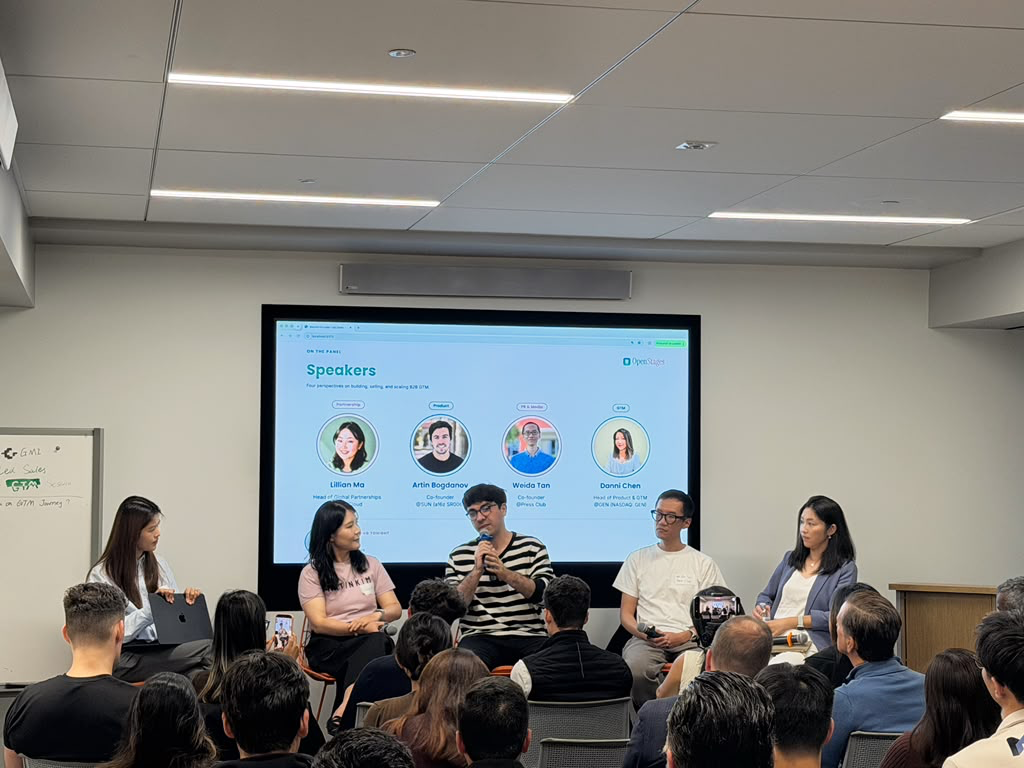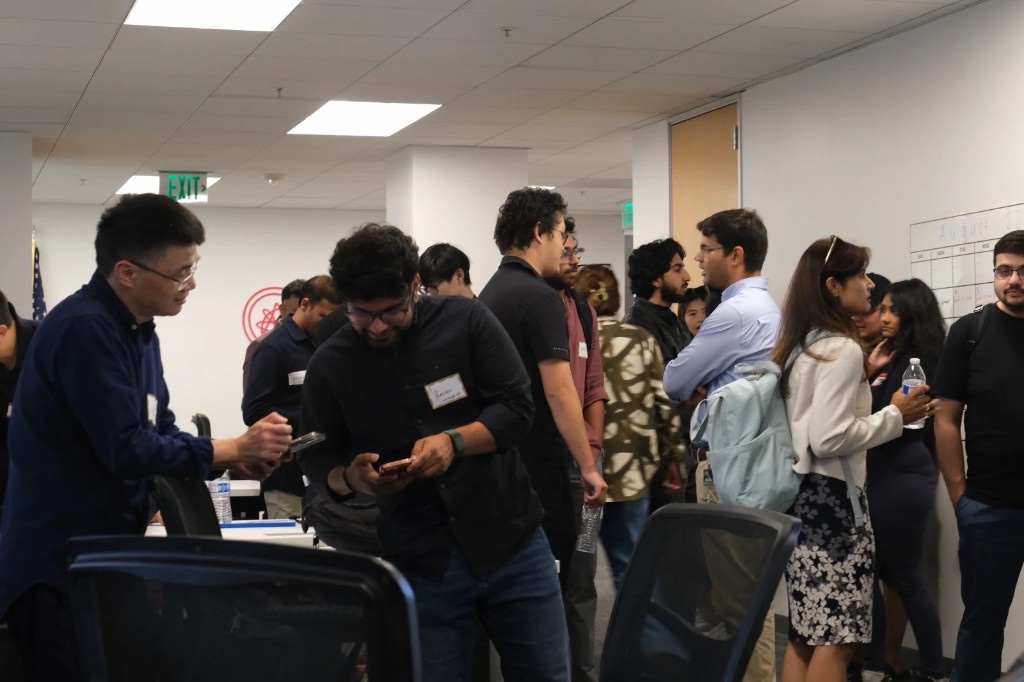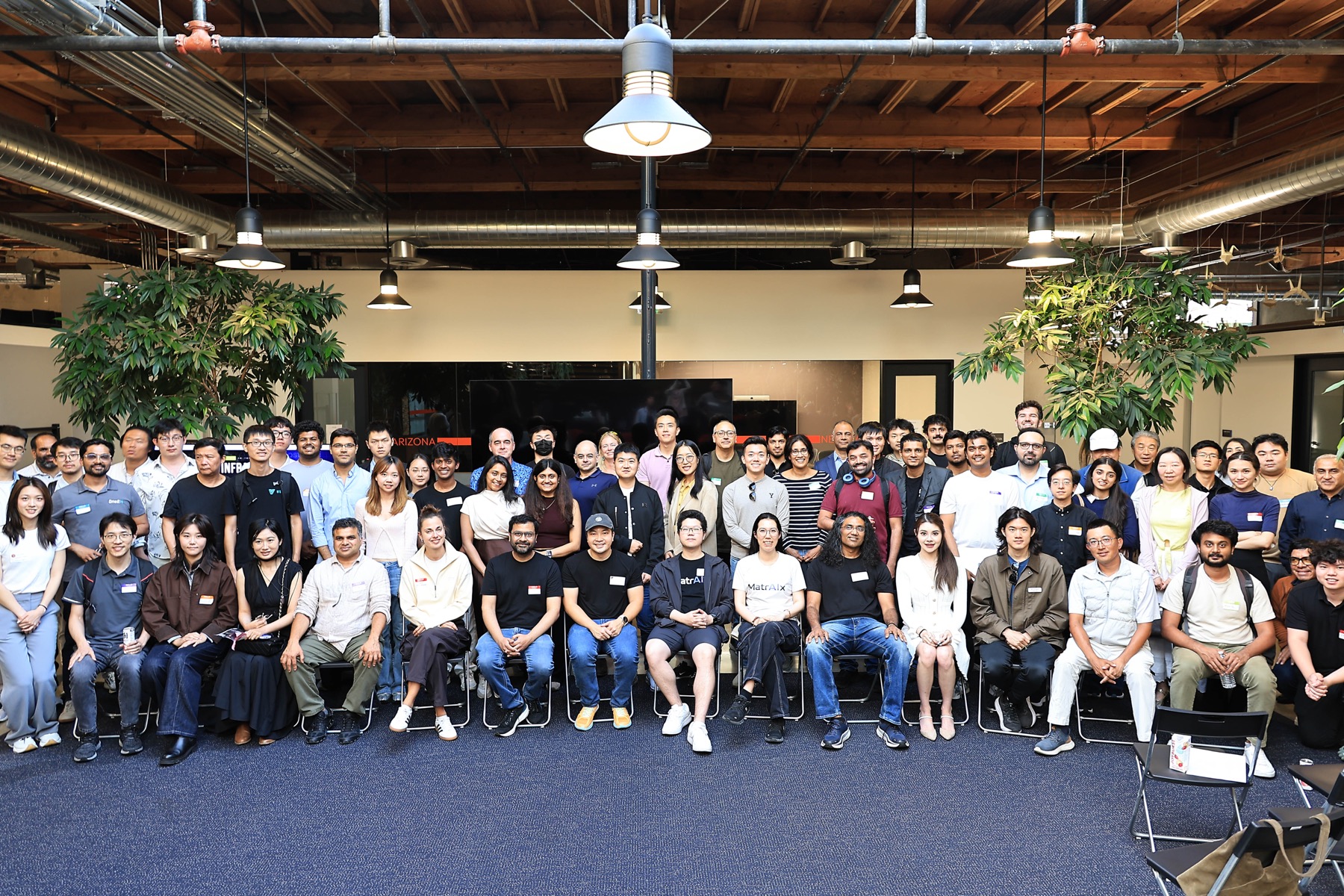
On September 12, 2026, around 100 AI infrastructure founders, researchers, engineers, enterprise leaders, and investors spent five hours together in Sunnyvale for AI Infra Signal: Build, Operate, and Monetize Intelligence, hosted by OpenStages.
We prepared carefully: the subjects, the companies, the speakers, and the format all mattered. We wanted people doing the core work of building and operating AI systems to have enough time to compare real problems across the stack. The result was an afternoon connecting GPU economics, inference, agents, reinforcement learning, world models, evaluation, and enterprise AI.
Several attendees told us this was among the highest-quality AI events they had attended. We are grateful for that feedback, and even more grateful to everyone whose preparation, questions, and contributions made the gathering work.
The room: 100 people working across AI infrastructure
AI Infra Signal brought around 100 participants together for five hours, from 2 PM to 7 PM in Sunnyvale. The application-only gathering combined featured sessions, lightning talks, a technical panel, demos, and time for conversation.
These were people working inside the industry: founders building infrastructure companies, researchers exploring new capabilities, engineers responsible for production systems, enterprise leaders evaluating deployments, and investors focused on the infrastructure layer. The speaker lineup connected Together AI, Cohere, Microsoft, MIT, Stanford, UC San Diego, DCVC, Tensormesh, Nutanix, TinyFish, Aether AI, XTrace, Modo, hosted.ai, Llama Ventures, VDURA, and Infron AI.
That mix was intentional. A researcher’s next experiment can become an operator’s next workload. An infrastructure bottleneck can become a founder’s next product. Bringing those perspectives into the same room was the point of AI Infra Signal.
1. GPU infrastructure: utilization connects engineering and economics
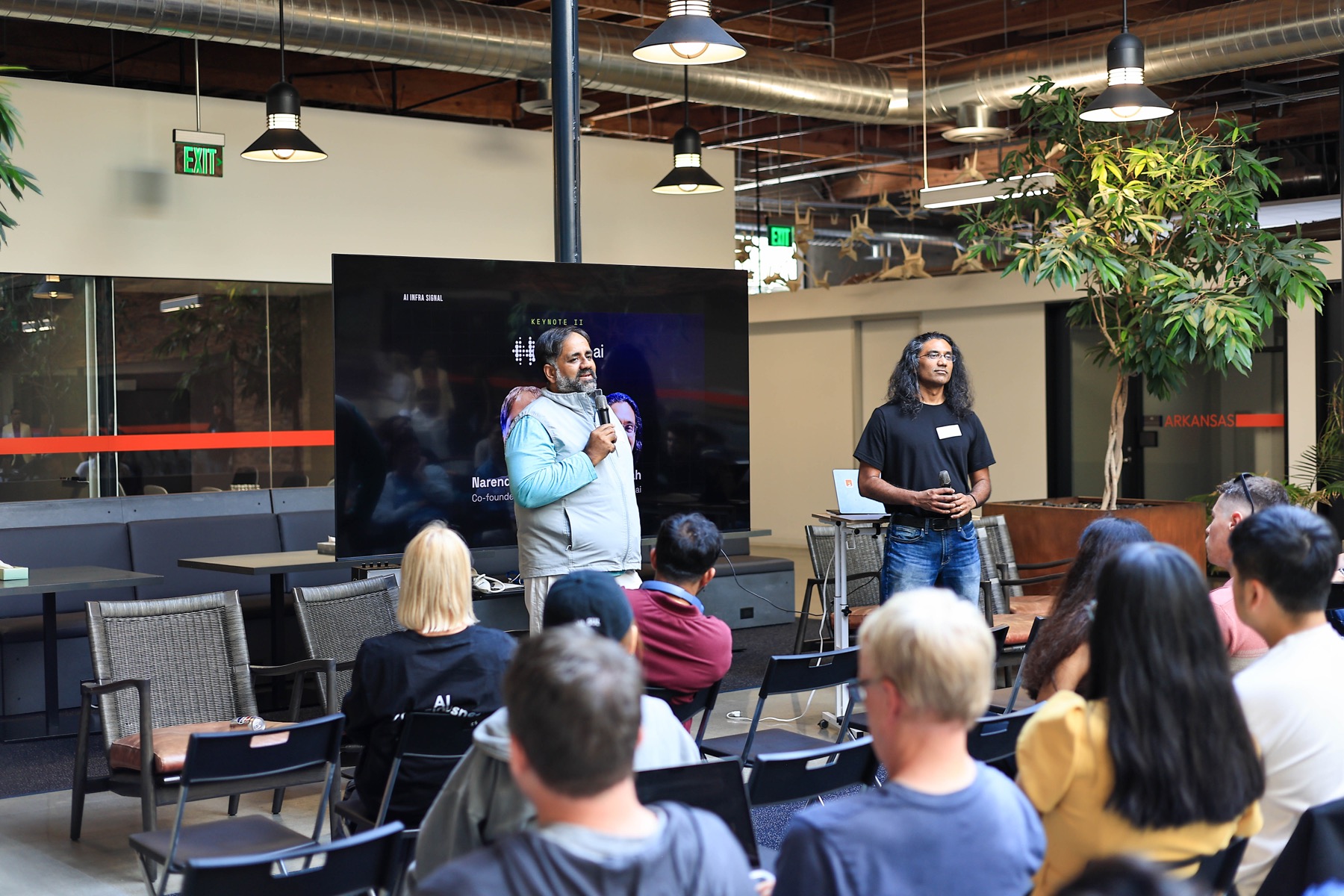
Edward Huang, Partner at Llama Ventures, brought the investment perspective. Narendar Shankar, Co-Founder and CCO at hosted.ai, and Nilesh Shah, VP at hosted.ai, anchored the GPU cloud and neocloud economics theme. Neoclouds are cloud providers focused on GPU capacity and AI workloads.
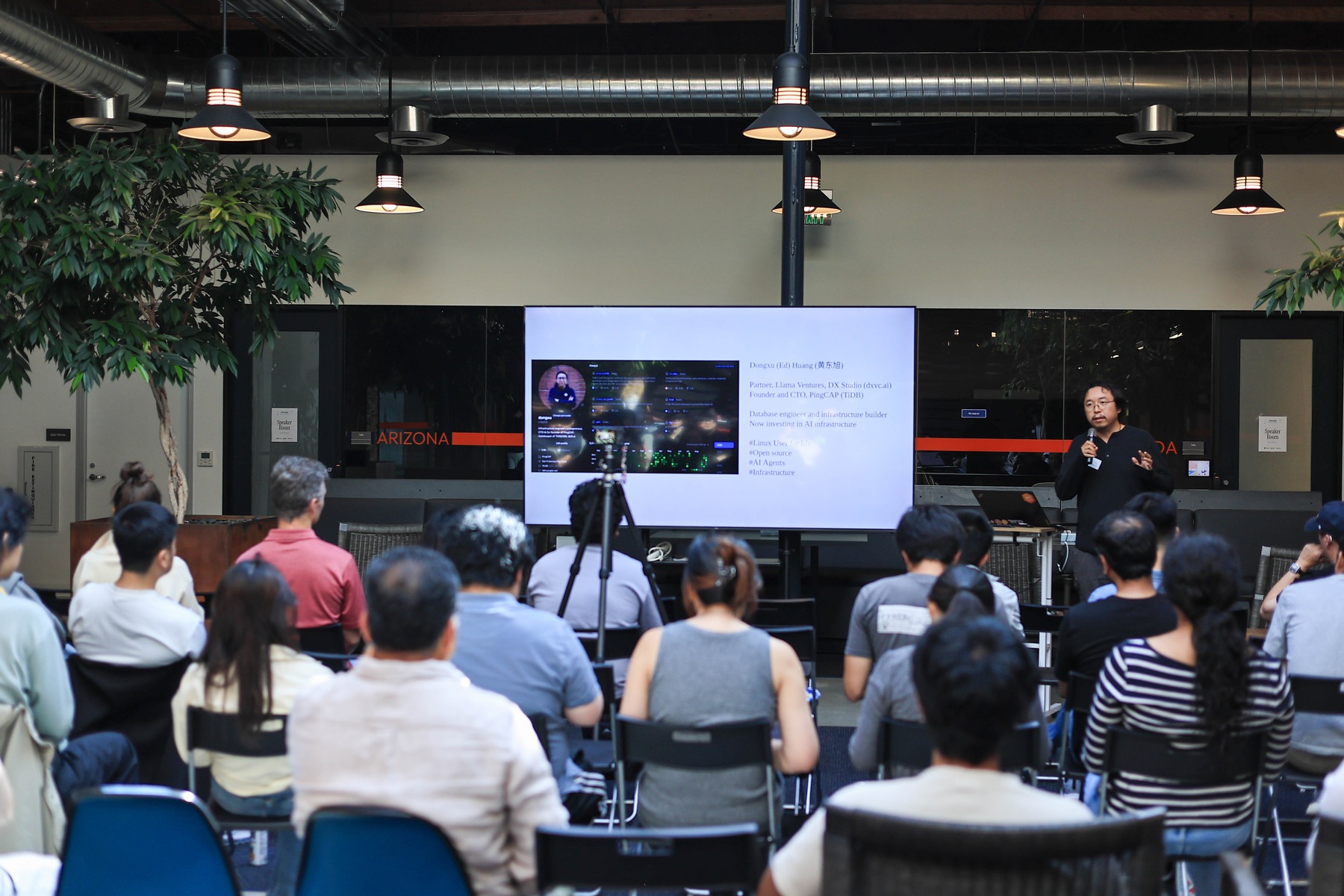
Our reading of these topics starts with a practical question: how much useful work can a team get from the hardware it already pays for? Buying GPUs is only part of the answer. Workload placement, scheduling, isolation between customers, and the ability to keep resources busy all affect the cost of delivering AI. These are also central concerns in hosted.ai’s GPU cloud platform.
For builders, the useful metric is more specific than fleet size: what does it cost to deliver a successful workload at the required service level? For investors, that question helps distinguish access to hardware from software that improves the economics of operating it.
2. Data infrastructure and inference performance belong in the same conversation
Samantha Clarke, VP at VDURA, connected the data stack with GPU utilization. Her session’s focus on training, inference, and data movement gave the program a useful bridge between compute capacity and the systems that feed it.
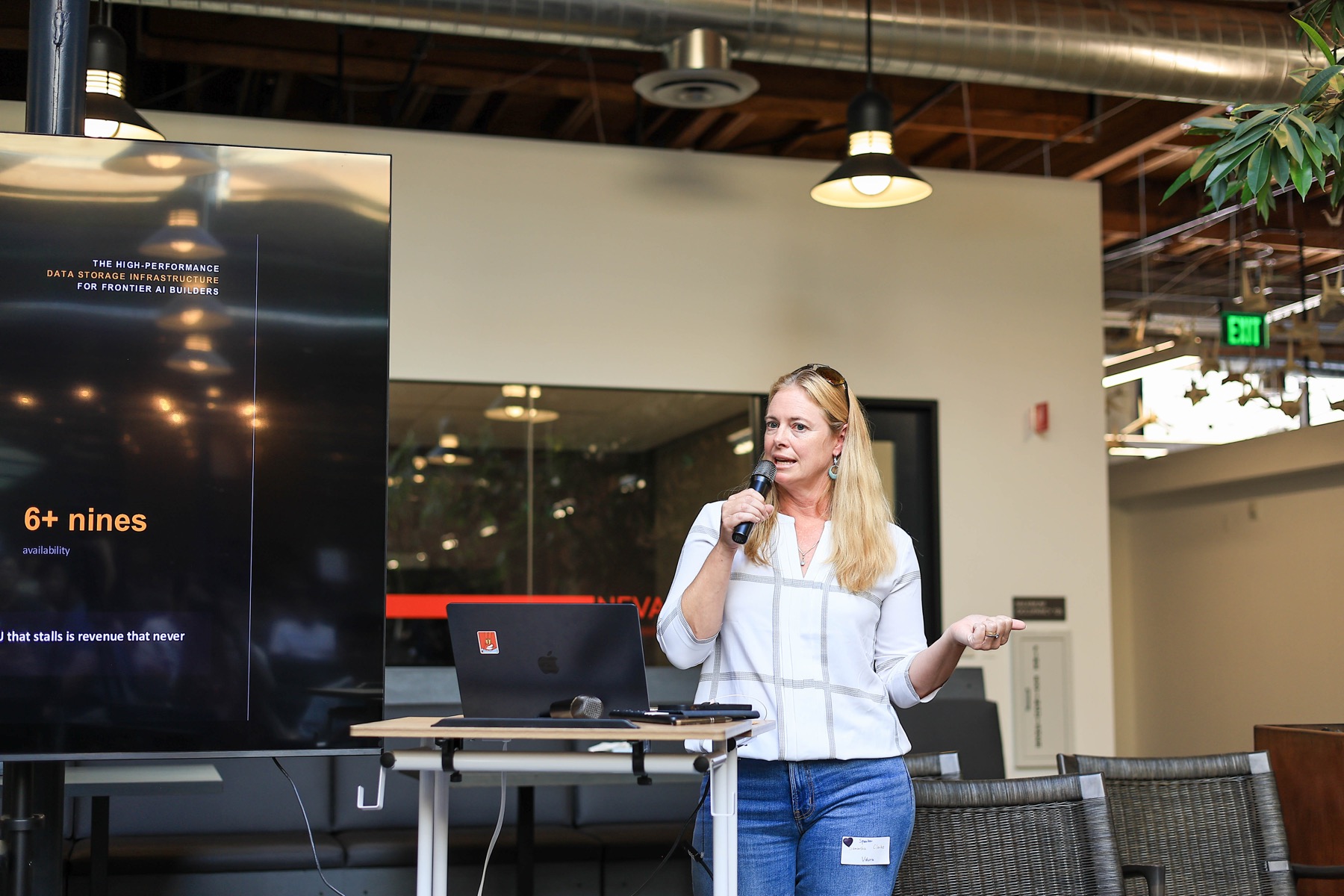
The infrastructure implication is straightforward: a GPU waiting for data cannot turn its theoretical performance into useful output. Storage throughput, memory capacity, network behavior, and scheduling need to be evaluated together. Improving one component may simply expose the next constraint.
LLM inference adds another dimension: serving longer contexts requires managing the model’s intermediate attention state, often called the KV cache. Tensormesh’s public work on inference beyond GPU memory offers a concrete example of coordinating GPU memory, host memory, and storage. This public example provides further context for the program’s inference theme.
3. Agent infrastructure extends from web access to learning from execution
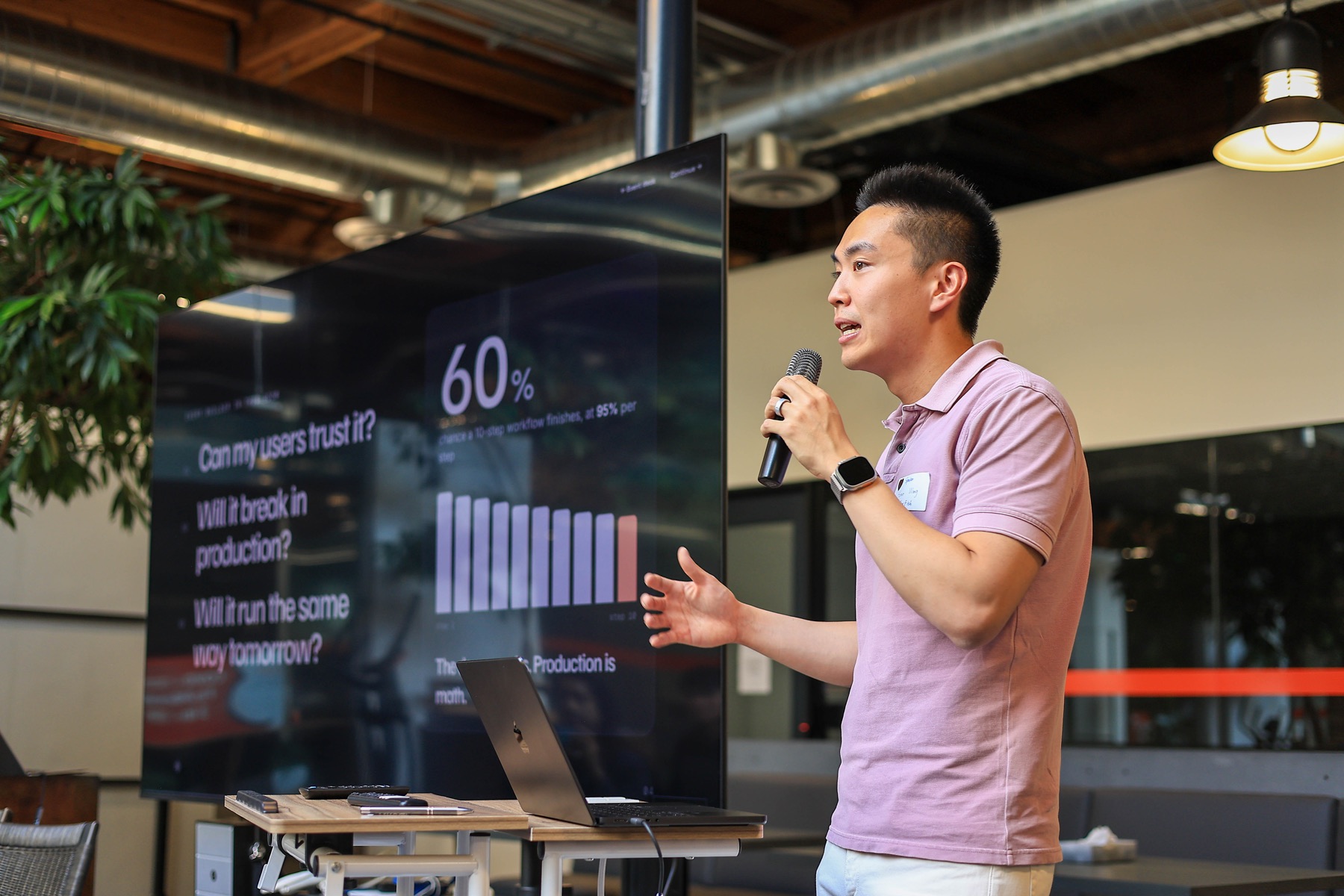
Homer Wang, Head of Product at TinyFish, introduced the web access theme. Felix Meng, CEO of XTrace, focused on teaching agents through the mistakes they make during execution. Together, those session topics frame two sides of the same problem: helping an agent act, then making the next attempt better informed.
A web agent needs to do more than generate text. It may have to find current information, navigate a page, maintain a session, and complete a sequence of actions. TinyFish’s web infrastructure illustrates the supporting layers: search, page retrieval, browser sessions, and multi-step execution.
Our broader takeaway is that agent reliability needs a record of what happened. Traces, feedback, corrections, and recovery paths can help teams understand why a task failed and what to change. A strong result on one model call does not establish that an entire workflow succeeds.
For teams building agent infrastructure, this suggests measuring task completion, failure recovery, and the cost of retries alongside latency and token usage. The infrastructure boundary expands to include the whole task.
4. Reinforcement learning raises new infrastructure questions
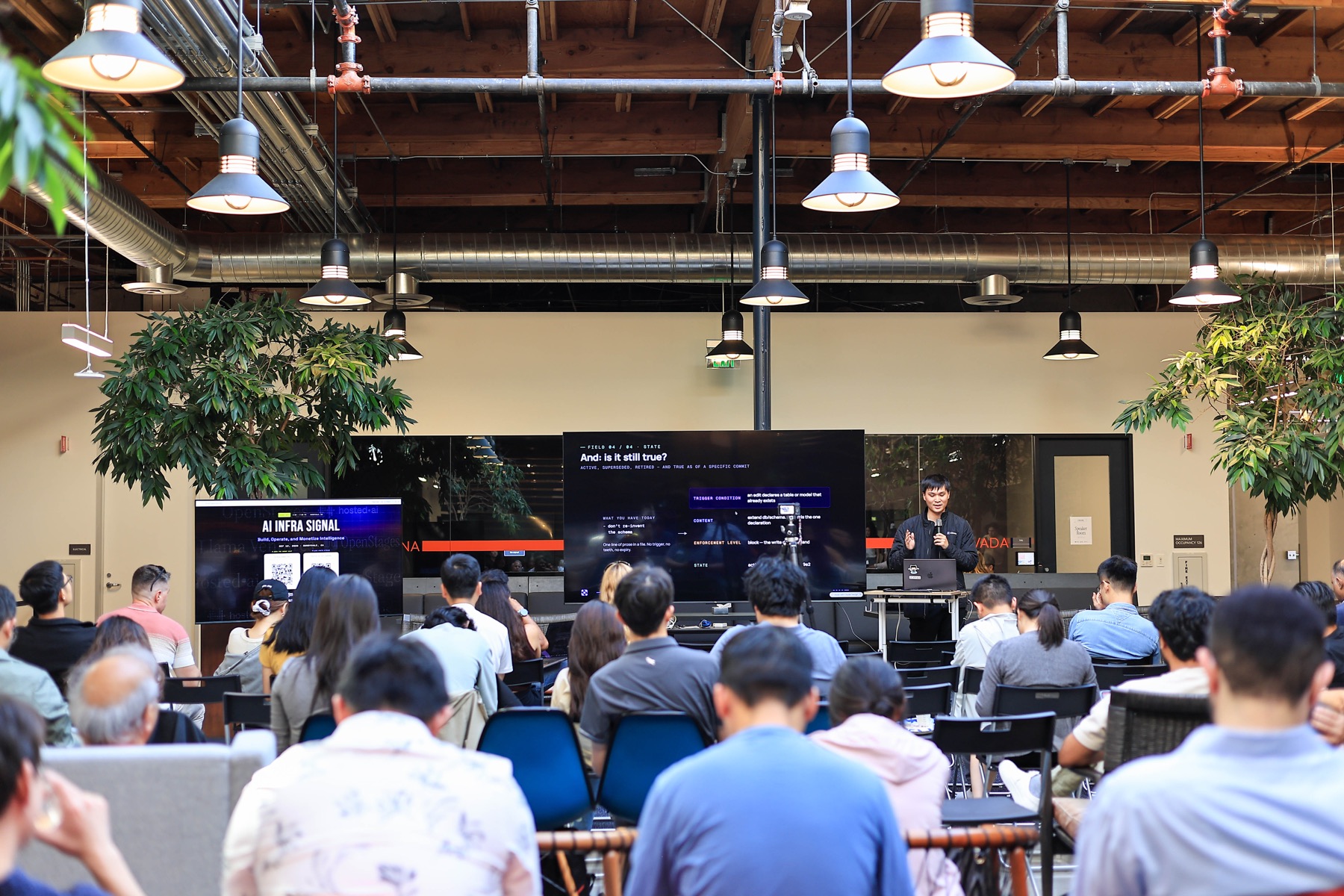
Yash More, Member of Technical Staff at Cohere, brought modern reinforcement learning infrastructure into the program. Reinforcement learning, or RL, connects model behavior with feedback about the outcomes it produces.
As an infrastructure lens, this topic asks how teams coordinate the parts of a learning loop: generating attempts, interacting with environments, computing rewards, updating a model, and evaluating the result. Each part can have different performance and reliability requirements.
The question we take from this theme is where a team loses time between experiments. More compute helps only when the surrounding pipeline can use it effectively. For builders, the opportunity includes orchestration and visibility into the learning process, alongside the training run itself.
5. Operating AI clusters requires a view across the stack
The technical panel brought together Vandon Duong, Principal at DCVC; Yihua Cheng, CTO and Co-Founder of Tensormesh; Rebecca Biju, AI Infrastructure Engineer at Together AI; and Sachin Keswani, Senior Product Manager at Nutanix. Chinat Yu, AI Researcher at Stanford, moderated.
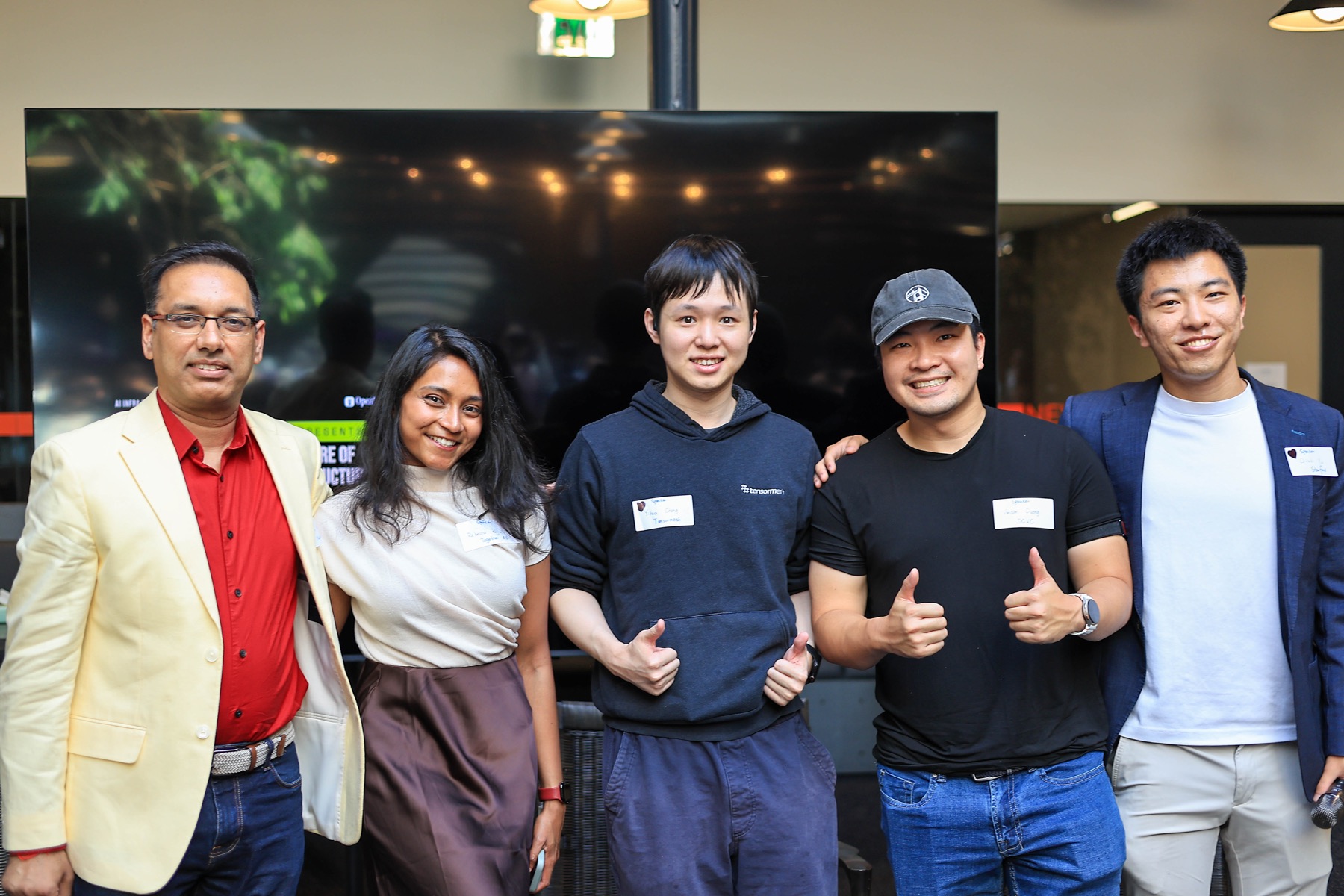
Its theme, moving from scaling models to operating agents, brought investment, inference systems, production engineering, and enterprise infrastructure into one discussion. The program framed questions around power, cluster reliability, inference economics, security, and where value accumulates in the stack.
Our synthesis is that bottlenecks move as workloads change. A deployment can be limited by capacity at one stage, data movement at another, and coordination or recovery at a third. Teams need to identify the current constraint before deciding which layer to optimize. A faster component matters most when it improves the performance or reliability of the complete system.
6. Causal world models connect AI research with future workloads
Biwei Huang, Founder of Aether AI and Assistant Professor at UC San Diego, introduced causal world models as a research direction for the next AI paradigm.
The distinction behind this topic is between recognizing patterns and reasoning about how an action could change an environment. For systems expected to plan and act, that distinction opens questions about state, prediction, intervention, and feedback.
Our infrastructure interpretation is forward-looking: if agents rely on richer models of their environments, the supporting systems may need to maintain and update more than a prompt history. Simulation, persistent state, and evaluation of consequences become relevant design questions for future infrastructure.
7. AI evaluation: what simulated users can help us test
Yuexing Hao, Microsoft researcher, MIT postdoctoral researcher, and founder of MatrAIx, joined Xiaomin Li, Senior Research Scientist at Microsoft and founder of MatrAIx, for their session, “MatrAIx: Simulating the World with 8.3 Billion Persona Agents.” Its focus brought simulated-user evaluation into the infrastructure conversation.
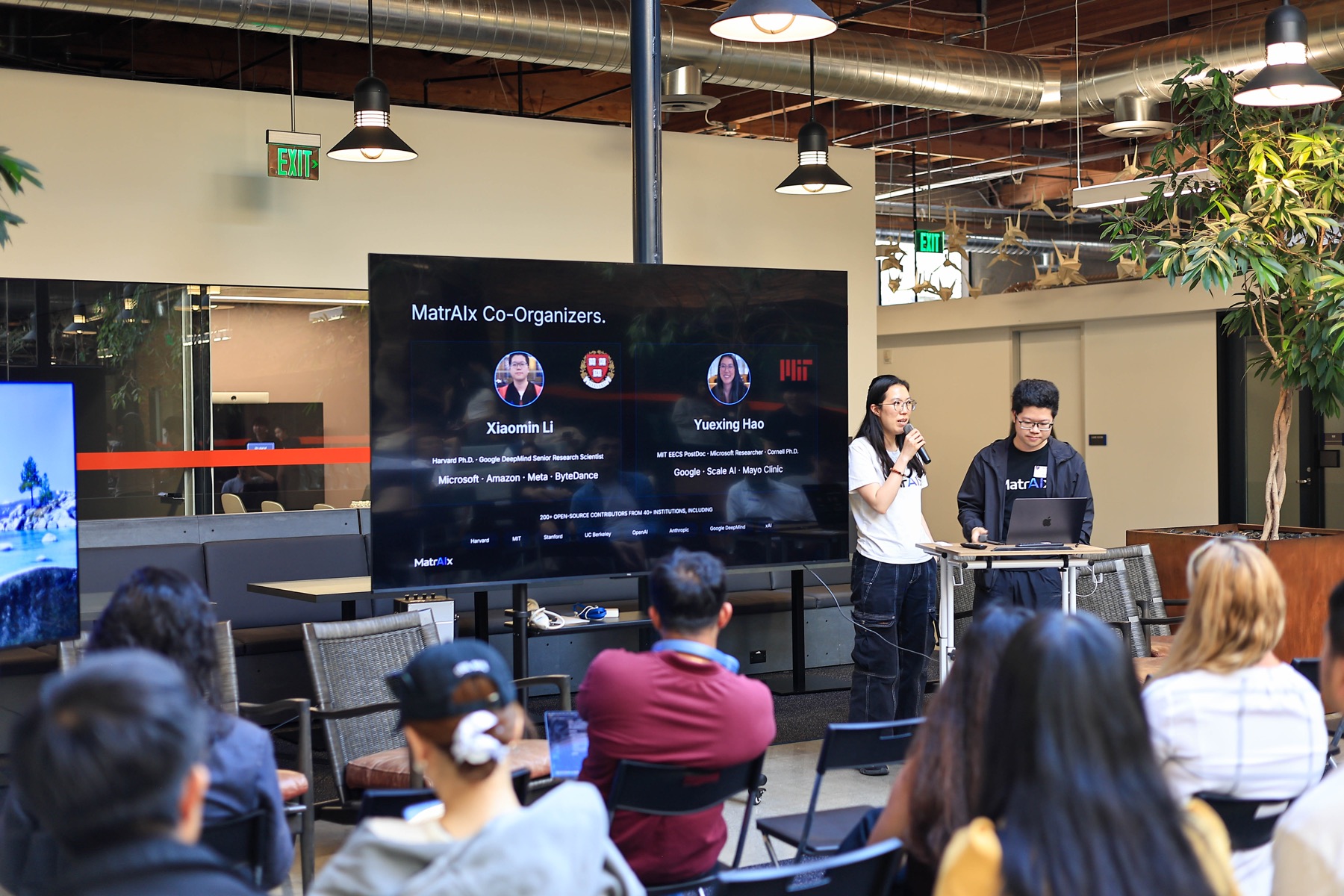
The topic invites a useful evaluation question: how does an AI product behave across different users, goals, and sequences of interaction? A static test can check an answer, while a simulated interaction can explore how behavior changes over several steps.
Our takeaway is that simulation could help teams investigate failure cases before a launch, provided they also test whether simulated behavior reflects real users. More personas alone do not establish representativeness. The infrastructure challenge includes designing scenarios, recording behavior, comparing versions, and connecting those results to evidence from actual use.
8. Enterprise AI needs a workflow-level view of ROI
Angelina You, Co-Founder of Modo, brought workflow ROI and project monetization into the program. Return on investment matters because a technically successful AI workflow still needs to justify the resources required to operate it.
For an enterprise team, useful questions include how much time a workflow saves, whether quality improves, how often a person must intervene, and what it costs to maintain the system. Inference spend is one input; integration work, retries, monitoring, and human review also belong in the calculation.
Our practical takeaway is to choose a workflow and define success before optimizing its model calls. A lower cost per token is valuable when it contributes to a useful outcome at an acceptable total cost. This connects enterprise deployment decisions directly back to the infrastructure underneath them.
9. Model access and routing create another infrastructure layer
Vanessa Lu, Head of Marketing at Infron AI, presented a demo centered on accessing multiple models through one API. Infron’s model interface connects that program topic with a concrete developer integration.
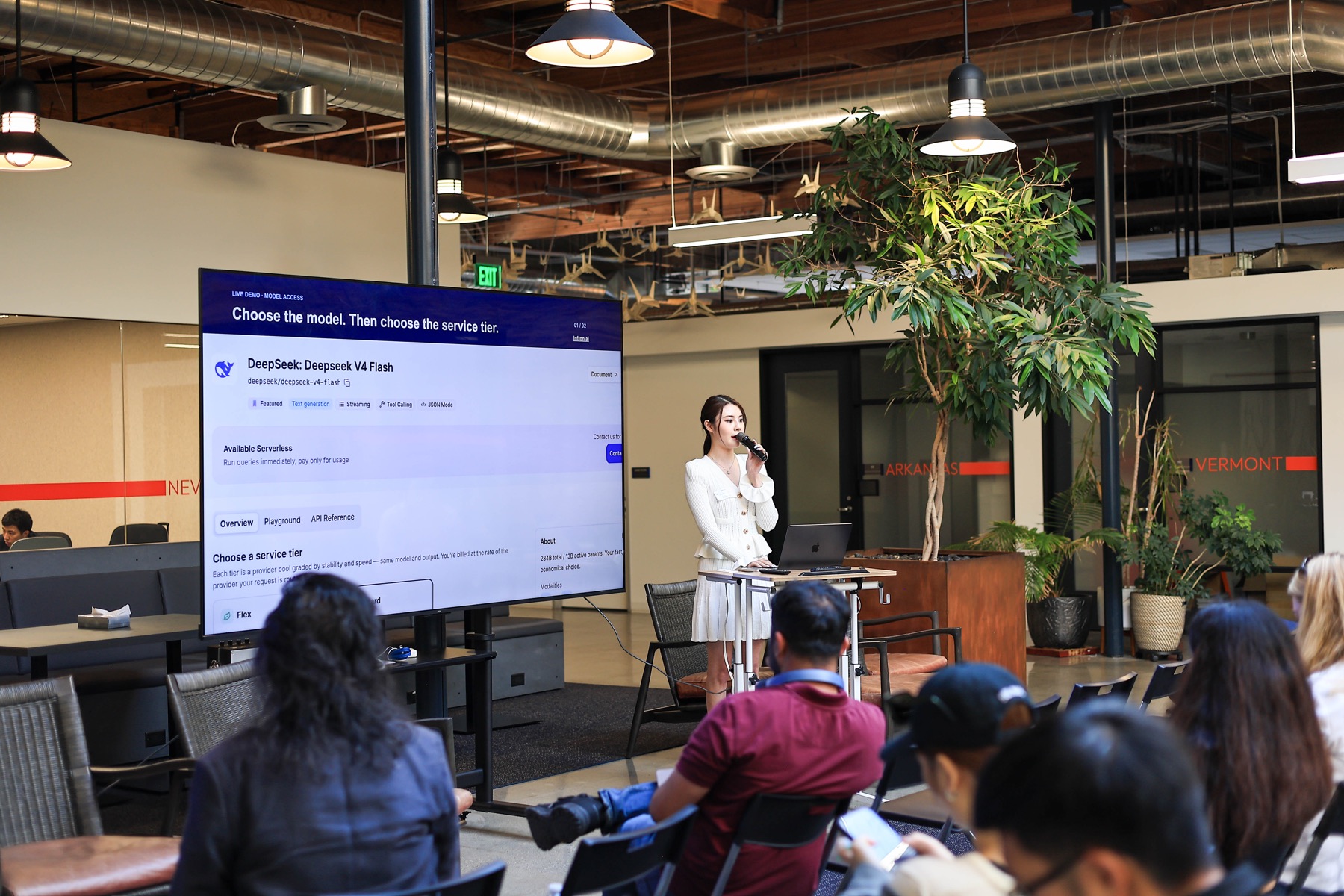
Our interpretation is that model access becomes an operating decision as applications use different models for different tasks. Teams need to weigh quality, latency, cost, availability, and data requirements. A shared interface can simplify access, while the application still needs a way to evaluate which model fits a workload.
For infrastructure builders, the questions extend to routing, fallbacks, usage visibility, and consistent evaluation. The useful objective is a dependable application, with model choices that can evolve as its needs change.
Key takeaways for AI infrastructure builders
- Compute economics depend on useful utilization: scheduling, data movement, memory, and reliability all affect the output of a GPU fleet.
- Inference and data infrastructure need to be designed together, especially as context and concurrency increase.
- Agents require support for complete tasks: web interaction, state, execution traces, evaluation, and recovery.
- RL, world models, and simulated users create new systems questions, with validation needed alongside capability gains.
- Enterprise AI should be measured at the workflow level, including operating costs and the value of the outcome.
The connection across these themes is the system around the model. Our reading of the program is that AI infrastructure creates value by making intelligence usable: supplying the right inputs, supporting execution, measuring results, and keeping the economics workable.
Five hours made possible by the community
We are so happy with how AI Infra Signal came together. We put real care into the themes, the companies, the speakers, and the flow of the afternoon. The community brought those plans to life.
Over five hours, the value came from what people contributed: thoughtful questions, practical experience, introductions, and a willingness to engage with each other’s work. Hearing that several guests considered this among the best AI events they had attended meant a great deal to our team.
Thank you to every speaker who prepared and shared their work. Thank you to every partner who helped make the gathering possible. Thank you to our volunteers for the care and effort behind the scenes. And thank you to every guest for taking an active part in the conversation.
OpenStages could not have made this event what it was without you. We want to keep creating space for this community to learn from one another, and we hope to see you again at the next gathering.

Thank you to our partners
Special thanks to hosted.ai and Llama Ventures for partnering with us, to Infron AI and VDURA for supporting the program, and to WeAreDevelopers as our ecosystem partner. We are grateful to everyone who helped bring this community together.
Stay connected for the next OpenStages gathering
If you are building AI infrastructure, researching intelligent systems, or operating AI in production, we would love to keep the conversation going. Follow the OpenStages event calendar for future gatherings and OpenStages on LinkedIn for community updates.
Explore the program and the community
Frequently asked questions
What is AI Infra Signal?
AI Infra Signal is an application-only AI infrastructure gathering hosted by OpenStages in the San Francisco Bay Area, bringing together founders, researchers, engineers, enterprise leaders, and infrastructure investors.
When and where was AI Infra Signal 2026 held?
The gathering took place on September 12, 2026, in Sunnyvale, California, from 2 PM to 7 PM.
How many people attended?
Around 100 people attended the five-hour gathering, including people building, researching, operating, and investing in AI infrastructure.
What topics did the program cover?
GPU utilization and neocloud economics, data infrastructure, LLM inference, agent infrastructure, reinforcement learning systems, causal world models, simulated-user evaluation, model access, and enterprise workflow ROI.
Who spoke at AI Infra Signal?
Speakers included Edward Huang, Narendar Shankar, Nilesh Shah, Samantha Clarke, Vanessa Lu, Biwei Huang, Homer Wang, Yuexing Hao, Xiaomin Li, Felix Meng, Yash More, and Angelina You. The panel featured Vandon Duong, Yihua Cheng, Rebecca Biju, and Sachin Keswani, moderated by Chinat Yu. See the OpenStages speaker roster for their profiles and affiliations.
How can I join a future OpenStages event?
Follow the OpenStages event calendar and LinkedIn page for announcements. Each event listing provides its own format, application process, and attendance details.