It has become remarkably easy to reach almost anyone. A founder can ask an agent to research a list of investors or buyers, draft a thoughtful note to each, and propose times on their calendars — and wake up to a set of replies. Much of the work that used to fill a founder's week is quietly being handed over.
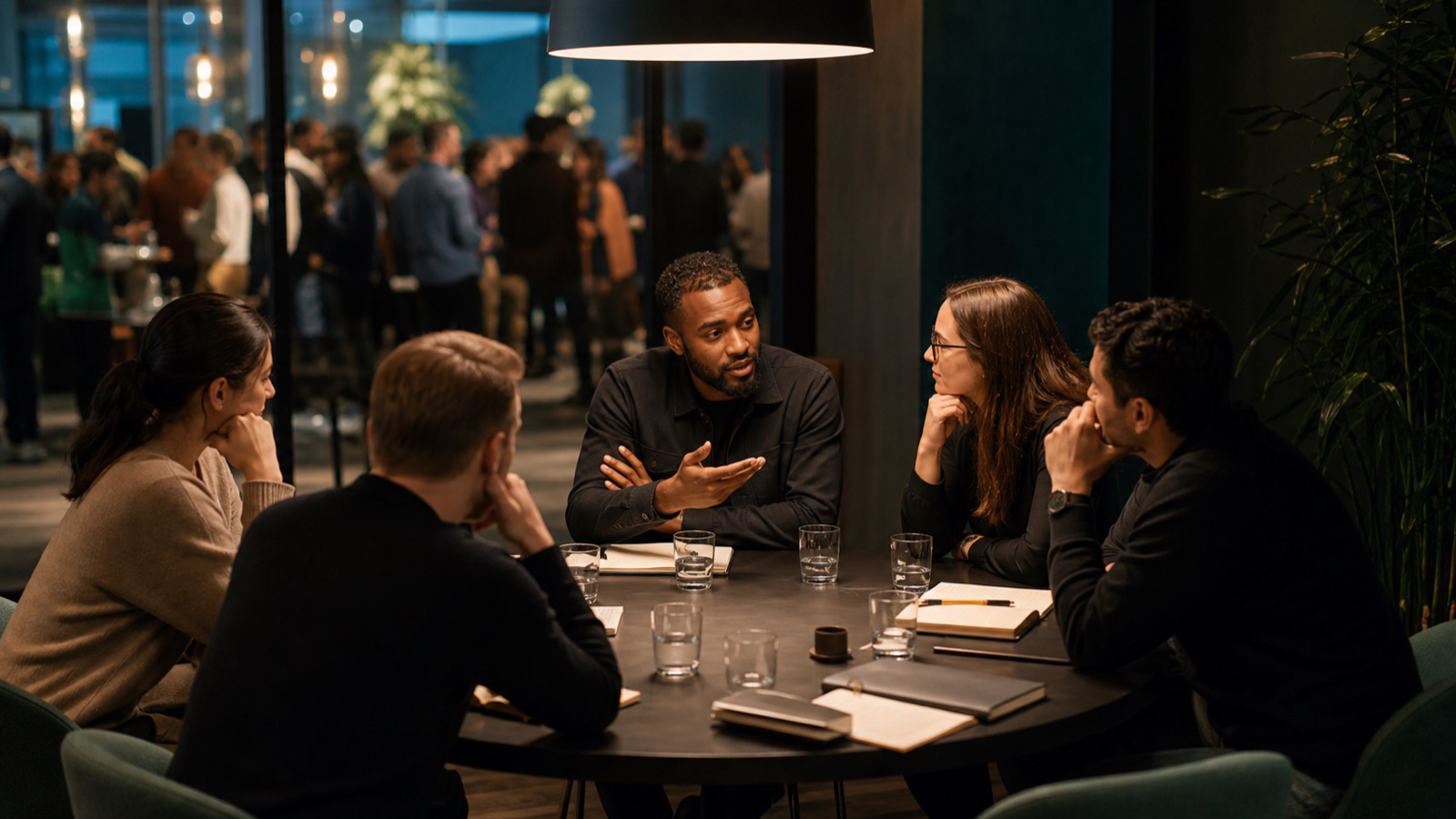
It would be natural to assume this makes in-person events less necessary. We have come to think the opposite. As agents absorb more of the mechanics of meeting people, the part they cannot do — the conversation itself — is becoming the most valuable part.
AI agents changed how founders meet people
AI agents have made outreach cheap and polished. When almost every message is well written and well researched, the message itself stops telling the recipient much. What still tells them something is context that is hard to manufacture: having met someone, having heard them think out loud, or having been introduced by a person they trust.
This is not a complaint about agents. They are genuinely good at the follow-up: remembering what was said, drafting the note, keeping a thread alive. But they work best as an amplifier for relationships that started somewhere real, rather than as a replacement for that starting point.
Agentic AI moves faster than anyone can document it
There is a second reason that is specific to this moment. Agentic AI is moving faster than anyone can document it. The most useful knowledge — which runtime setup actually holds up, where permissions break down, what an enterprise security team asked for last week — tends to live in the heads of the people doing the work, long before it appears in a blog post or a paper.
That kind of knowledge is shared in conversation. Someone mentions the failure they hit on day three of a pilot; someone else has seen the same thing and found a way around it. These exchanges are rarely written down, and they are often the most valuable thing a founder takes home.
Five things in-person networking still does best
- Candour. People are more willing to share what did not work when they are speaking to a small, trusted group.
- Judgment. A live conversation shows how someone reasons through a problem, not just the conclusion they reached.
- Unexpected context. The most useful insight is often an answer to a question you did not know to ask.
- Second-degree trust. An introduction from someone who has heard you speak carries a different weight from a cold message.
- Timing. Hearing what a team is planning this quarter, before it is public, can change what you build next.
The Bay Area concentrates the agentic AI ecosystem
The people shaping agentic AI are unusually close together. Model labs, the companies building agent infrastructure, the enterprises running early deployments and the investors backing them are mostly within an hour of one another. That density means a single well-composed afternoon can put a founder in conversation with more of the right people than weeks of remote outreach.
It also means there is no shortage of events, and not all of them are worth an afternoon. The rooms that tend to pay off share a few qualities: a focused topic, a thoughtfully composed guest list, speakers who are building or buying the thing being discussed, and enough unstructured time for conversations to go somewhere. We explore this further in how to choose Bay Area AI events.
Frequently asked questions
Is in-person networking still worth it for AI founders?
Yes, and arguably more than before. Agents make outreach easy, which lowers the signal of any single message. Relationships that begin in a real conversation — and introductions made afterwards — carry more weight with investors, buyers and future teammates.
How can founders combine AI agents with in-person events?
Use agents for preparation and follow-up — researching who will be in the room, summarising conversations, drafting thoughtful notes afterwards — and spend the time in the room on the conversations themselves.