Flagship salonSep 12, 2026Sunnyvale100 in the room
AI Infra Signal — Build, Operate, and Monetize Intelligence
OpenStages designed, curated, and ran a 100-person flagship room for the people who build, operate, and monetize the AI stack — an application-only afternoon in Sunnyvale where GPU economics, inference, agents, and enterprise adoption were argued by the investors, researchers, engineers, and operators who each own a different part of the answer.
The case study explains how the room was built. The companion story goes further into what was said, what changed, and what other founders and operators can use.
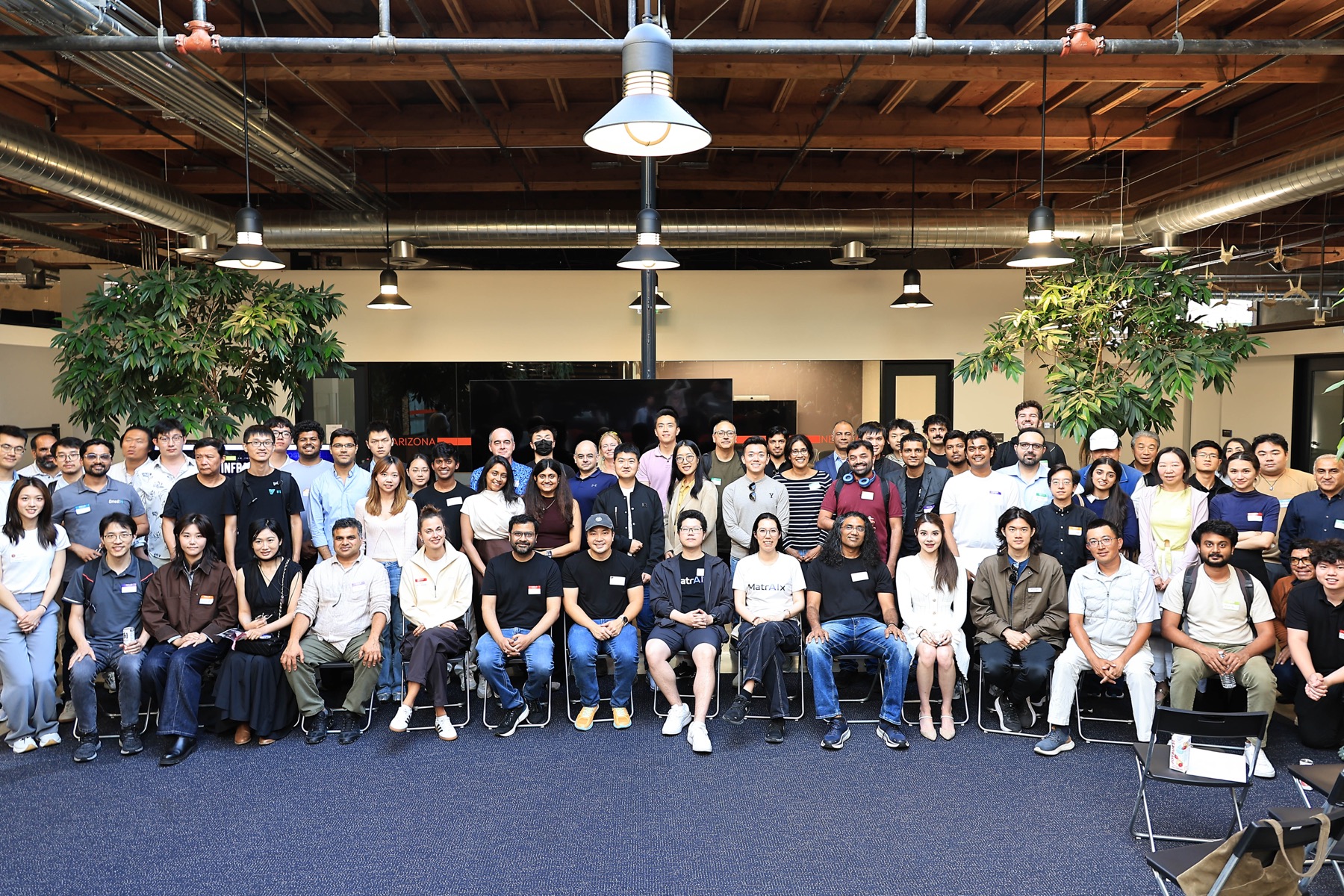
Around 100 AI infrastructure builders, researchers, enterprise leaders, and investors gathered for five hours in Sunnyvale.
02
GPU utilization, data movement, inference, and reliability shape the economics of useful compute.
03
Agents expand infrastructure needs to include web access, state, traces, evaluation, and recovery.
04
RL, world models, and simulated users introduce new systems and validation questions.
application-only seats, every one reviewed for fit
100
application-only seats, every one reviewed for fit
speakers from DCVC, Together AI, Nutanix, Microsoft, Cohere, and Stanford
17
speakers from DCVC, Together AI, Nutanix, Microsoft, Cohere, and Stanford
themes programmed end to end, no two overlapping
9
themes programmed end to end, no two overlapping
partner companies, each built into the programme
5
partner companies, each built into the programme
The brief.
AI infrastructure has no shortage of conferences, and most of them put four versions of one perspective on stage. Our partners needed the opposite: a room where the people who fund this work, the people who research it, the people who keep it running in production, and the people selling it into enterprises were all in the same conversation — small enough that they would actually speak plainly, senior enough that it was worth their afternoon, and structured so nobody had to sit through a vendor pitch to get to the substance.
What we did.
01
Programmed nine themes, not nine speakers
We built the afternoon around the questions the stack is actually stuck on — utilization, data movement, agent execution, RL, evaluation, enterprise ROI, model routing — and then found the person best placed to take each one. The theme came first, which is why no two sessions repeated each other.
02
Screened every seat
Application-only, reviewed one guest at a time against who the room needed. A hundred people who each had a reason to be there beats three hundred who registered.
03
Ran three formats in one afternoon
Four featured sessions for depth, six lightning talks for range, and a closing panel to force the disagreement into the open — paced so attention never had to hold the same shape for five hours.
04
Gave the partners the room, not a banner
hosted.ai, Llama Ventures, Infron AI, and VDURA were programmed into the substance — a keynote, a demo, a session on their actual domain — instead of being thanked from the podium.
05
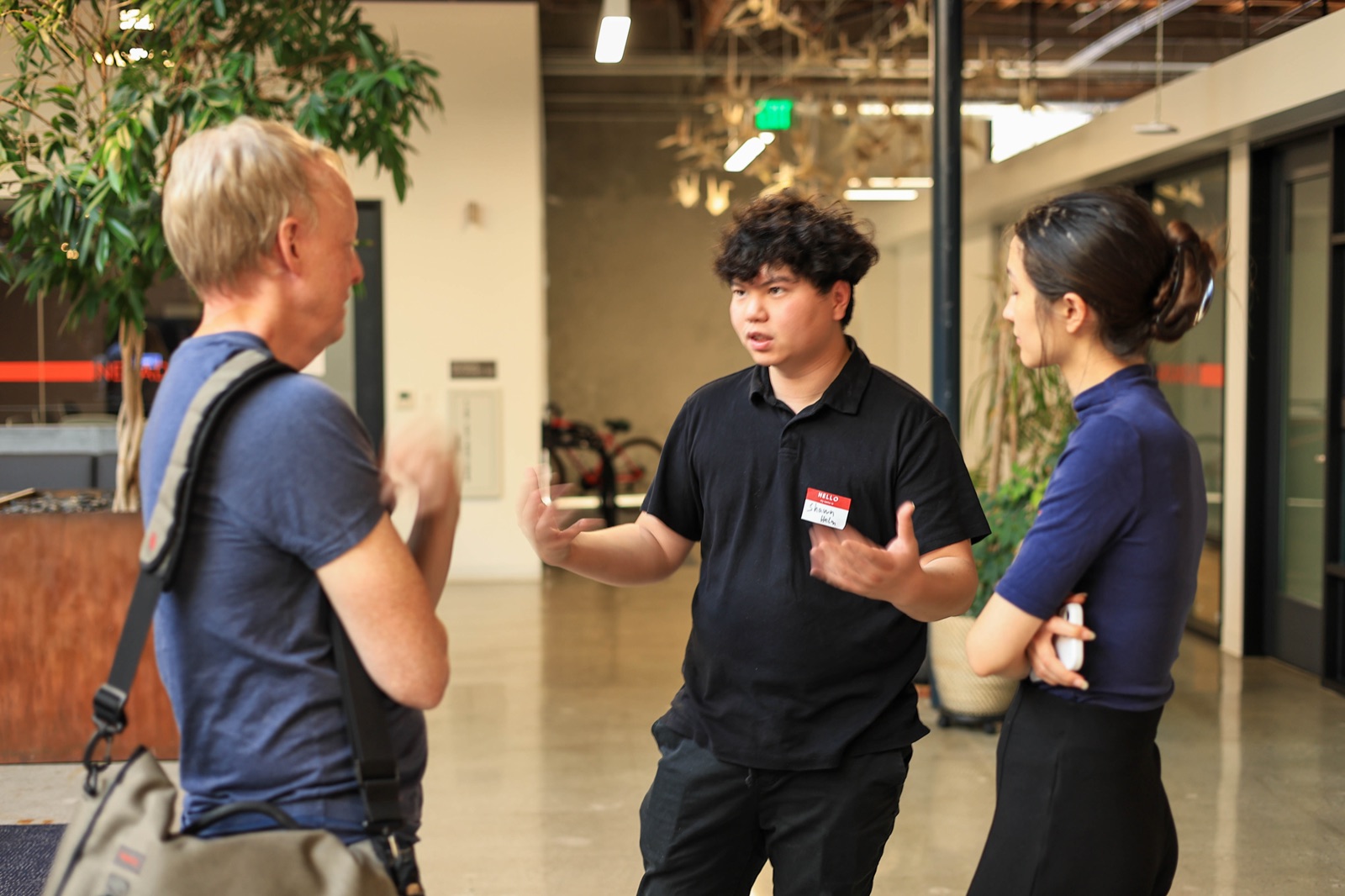
Closed with 90 minutes of demo floor
The programme ended early on purpose. Conversations that started on stage finished in person, which is where the introductions that matter actually happen.
06
Turned the afternoon into a permanent asset
A written recap of all nine themes, a profile page for every speaker, and the first edition of the GIFTS panel series — so the room keeps working for the partners long after the night ended.
What came out of it.
01
A room that held: founders building infrastructure companies, researchers exploring new capabilities, engineers responsible for production systems, enterprise leaders evaluating deployments, and investors focused on the layer — all of them staying the full five hours.
02
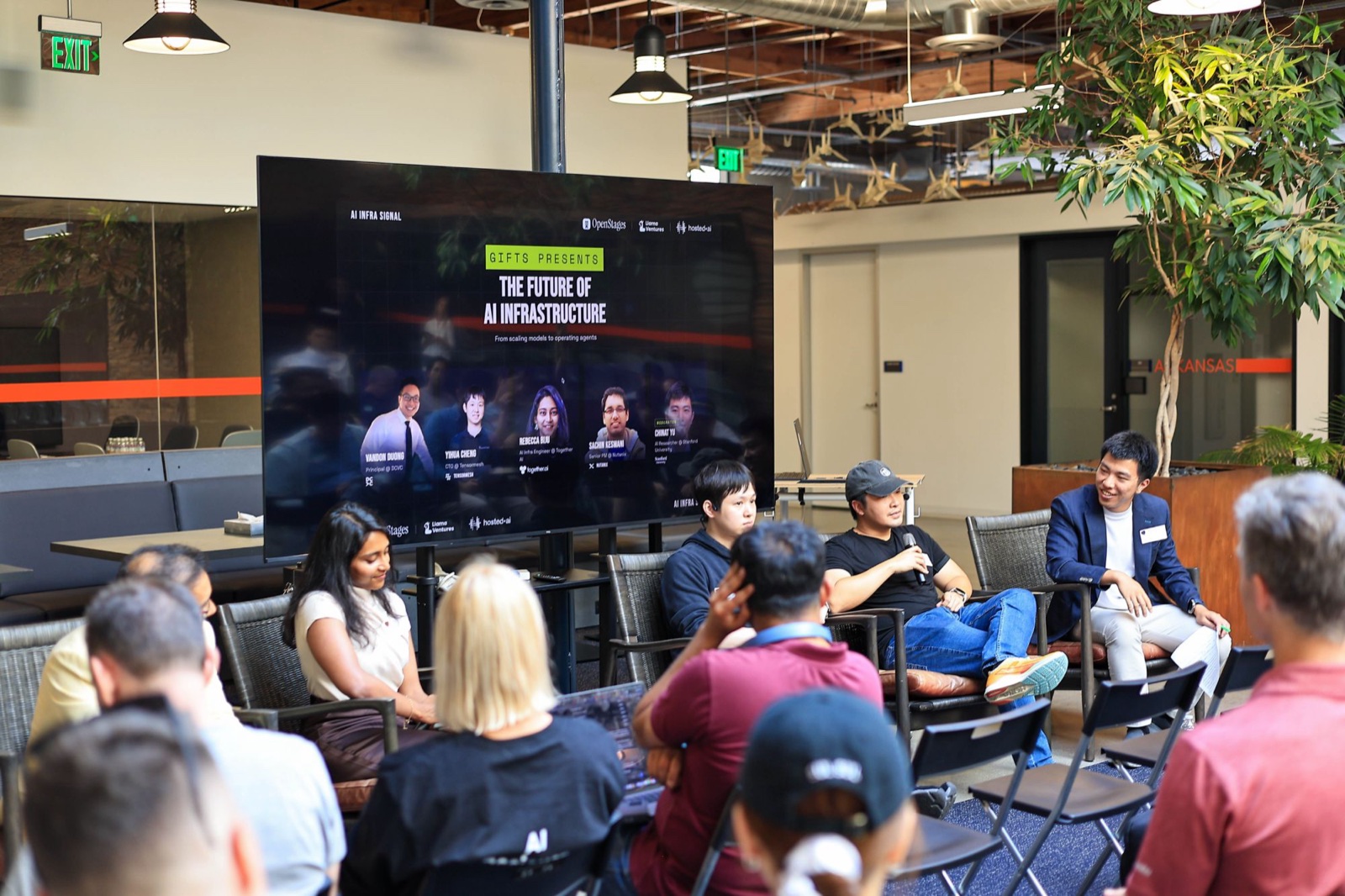
The closing panel launched GIFTS, our recurring AI dialogue series, with DCVC, Tensormesh, Together AI, and Nutanix on power, inference economics, cluster reliability, and where value accrues across the stack.
03
Several guests told us it was among the best AI events they had attended — from a room of people who attend a lot of them.
04
The afternoon became three lasting assets: a nine-theme written recap, seventeen speaker profiles, and two follow-on articles on the AI infrastructure stack and inference economics.
Photos
From the room.
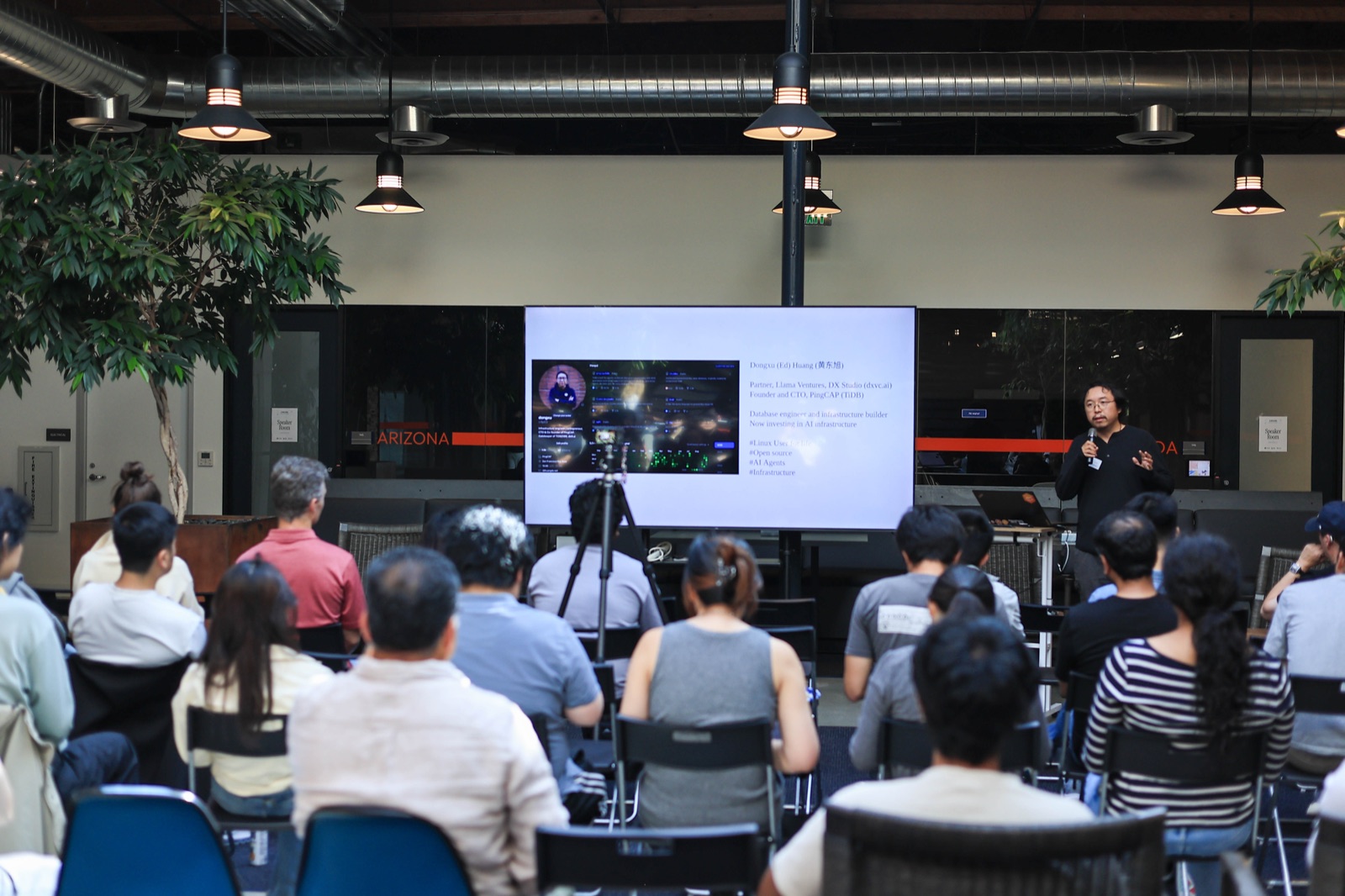
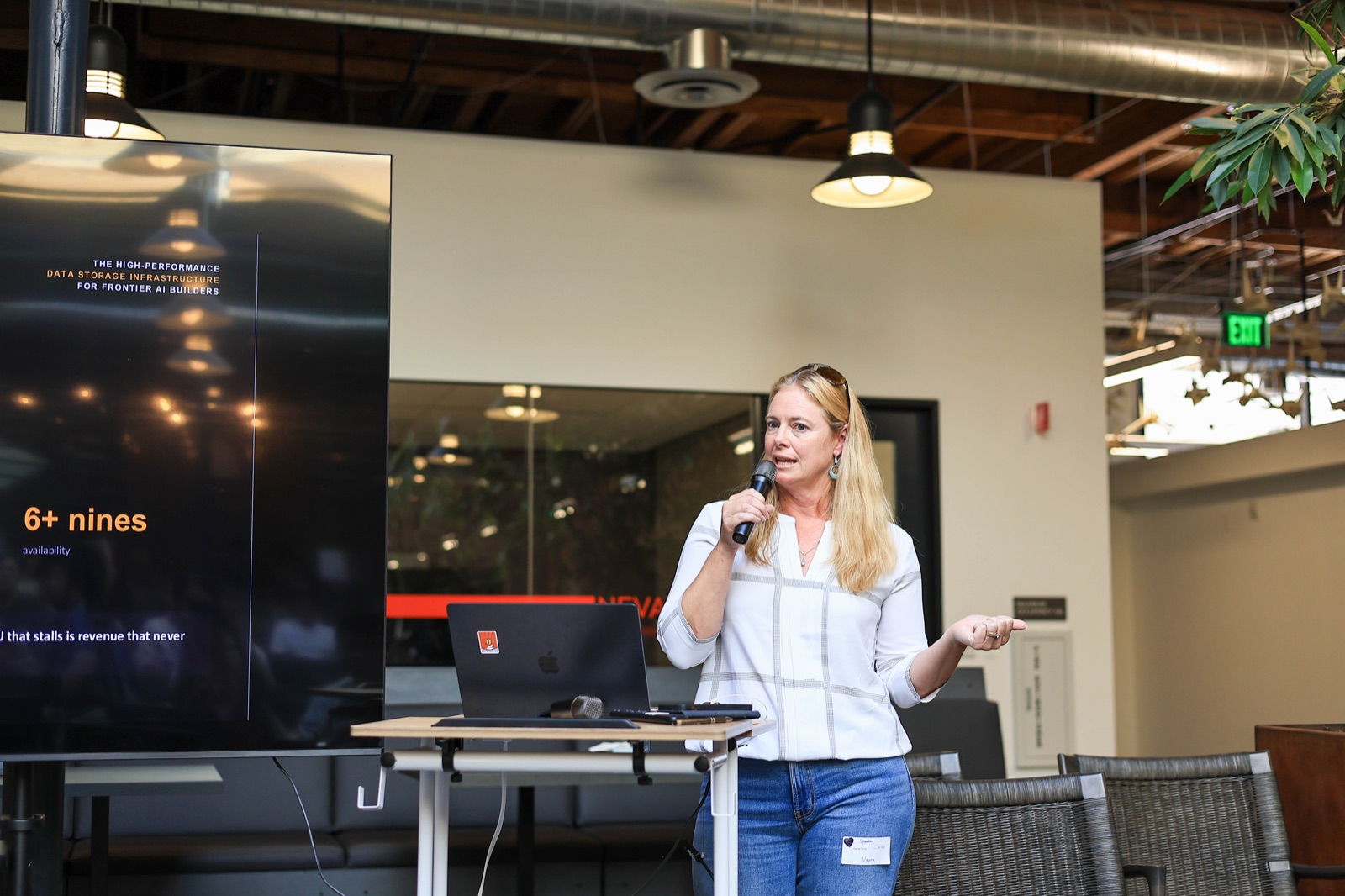
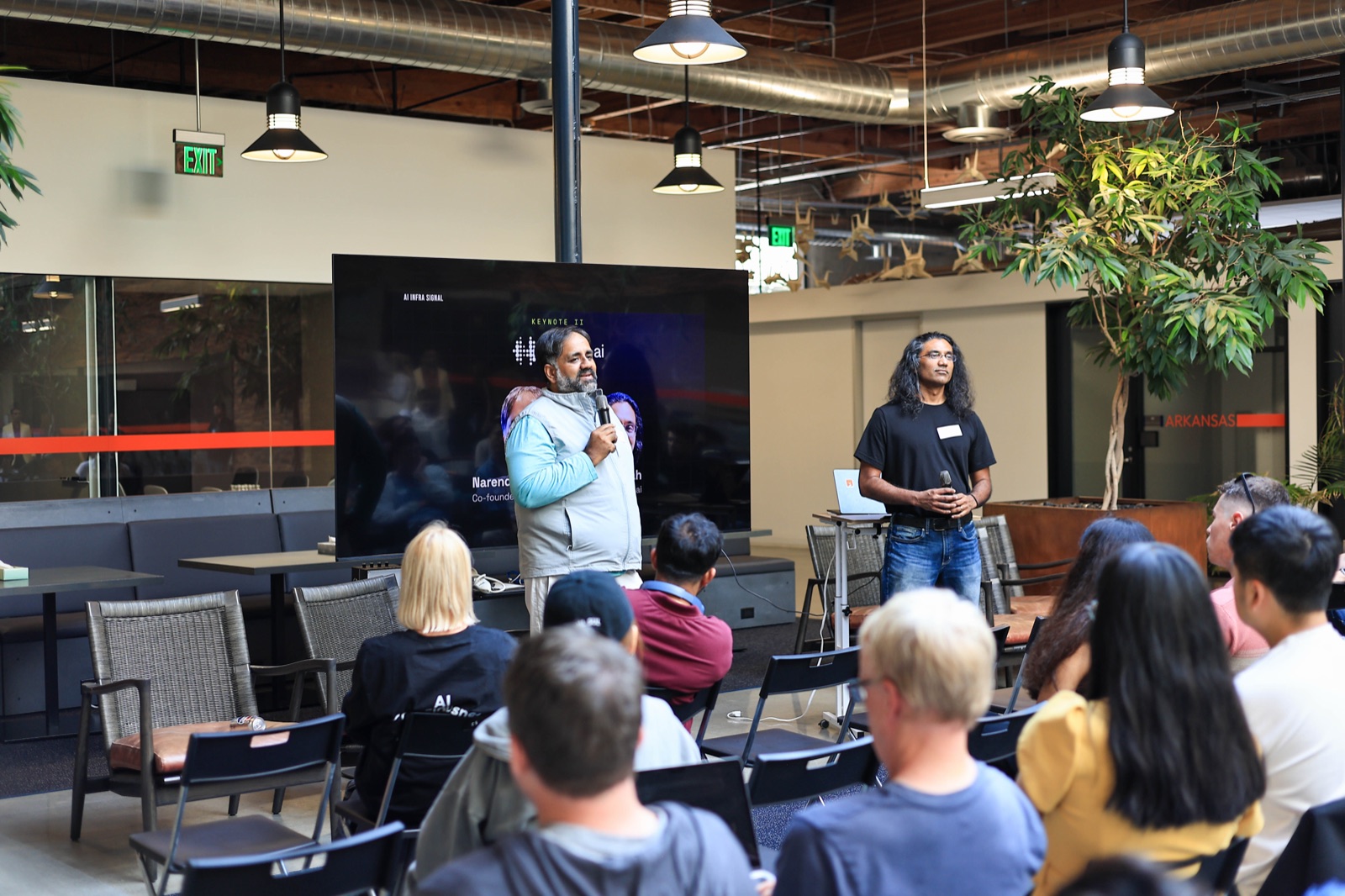
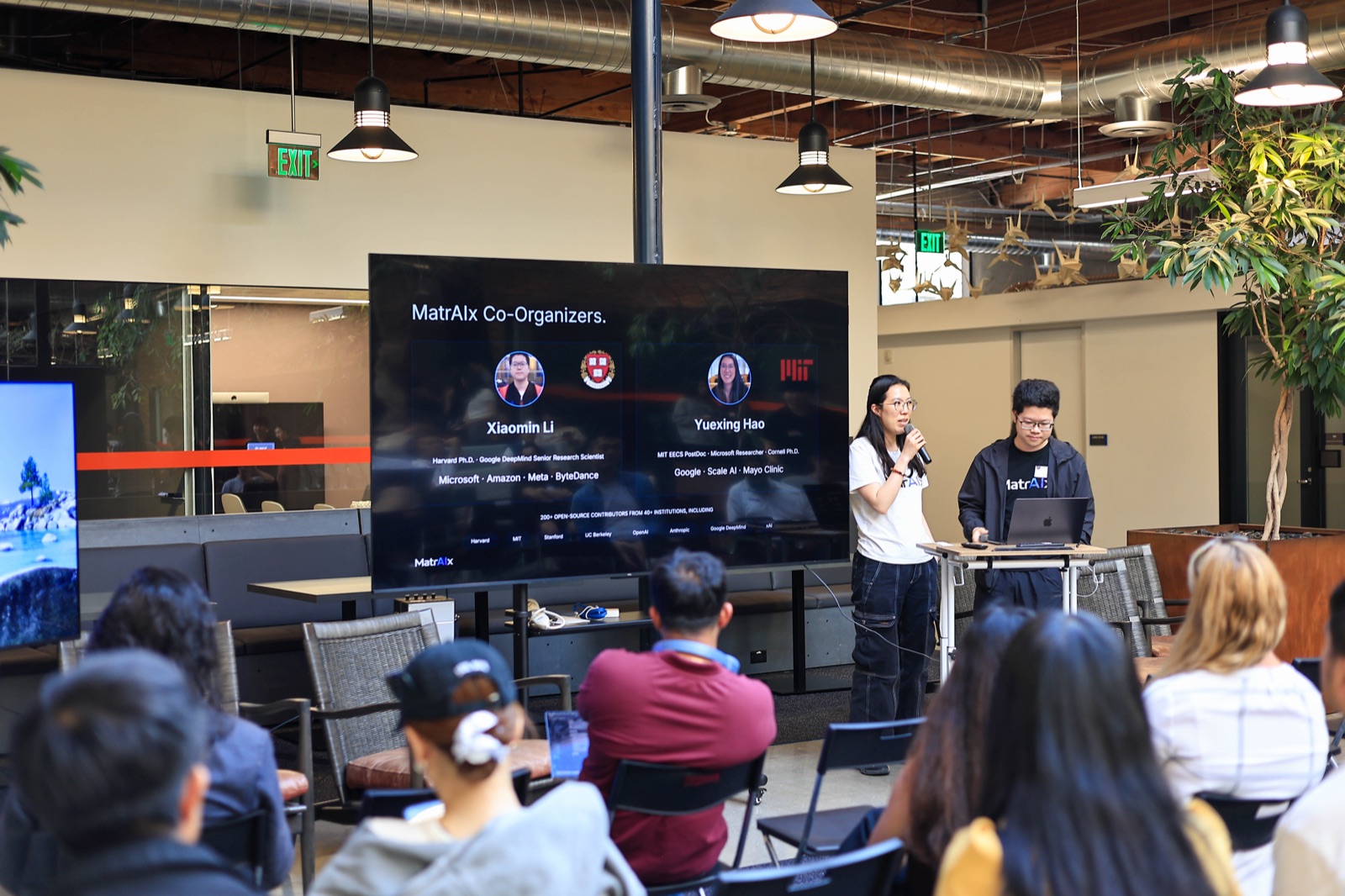
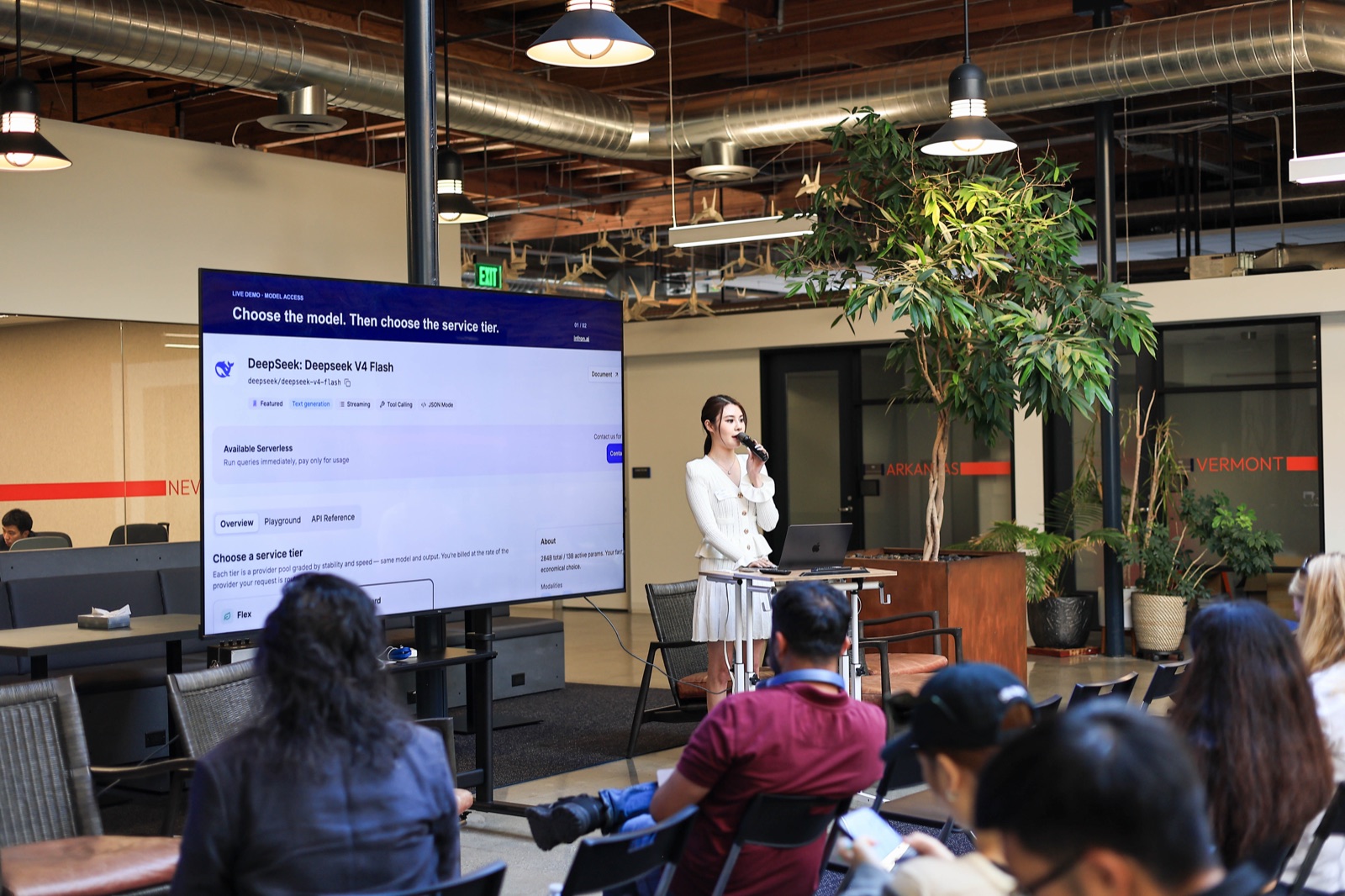
01/07The GIFTS panel on the future of AI infrastructure at AI Infra Signal — Vandon Duong of DCVC, Yihua Cheng of Tensormesh, Rebecca Biju of Together AI, Sachin Keswani of Nutanix, and moderator Chinat Yu of Stanford02/07The AI Infra Signal room mid-session in Sunnyvale, with around 100 application-only guests seated for a featured talk03/07A featured session on the high-performance data stack behind frontier AI, presenting six-nines availability at AI Infra Signal04/07Two speakers taking questions during a featured session at AI Infra Signal05/07The MatrAIx lightning talk on simulating the world with persona agents, presented at AI Infra Signal by researchers from Microsoft and MIT06/07A live demo of model access and routing — choosing a model and a service tier through one API — on the AI Infra Signal demo floor07/07Guests talking during the 90-minute demo floor that closed AI Infra Signal